Last Updated: July 4, 2026
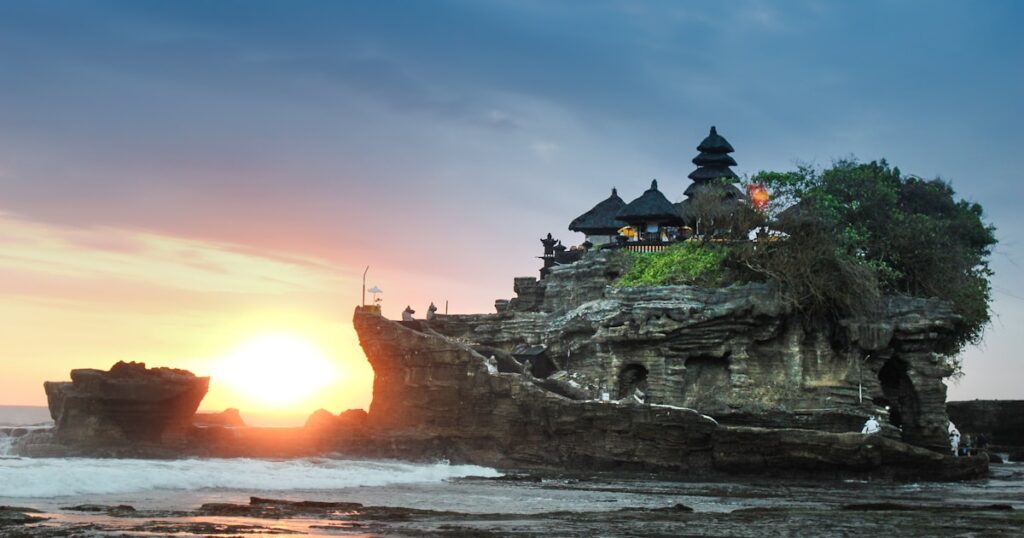
Pulau Serangan — Bali’s Turtle Island — is a place where centuries of Hindu heritage, remarkable marine ecosystems, and the ambitions of a new era of Indonesian tourism converge on a single island just 15 minutes from Bali’s international airport. This comprehensive guide covers everything you need to know about Serangan Island in 2026: its 1,000-year-old temple, its famous reef break, its turtle sanctuary, and its transformation into the Kura Kura Bali Special Economic Zone.
The Geography & Location of Serangan Island
Serangan Island sits at the southern tip of Denpasar, connected to mainland Bali by a permanent causeway. The island spans approximately 365 hectares following the 1997 reclamation that expanded it from its original 101-111 hectares.
It is bordered by Benoa Bay to the north and the Indian Ocean to the south, with coordinates placing it just 15 minutes from Ngurah Rai International Airport (approximately 12 km). The island is accessed via Jl. Tukad Punggawa from the Sanur/Nusa Dua direction.
History of Serangan Island: From Fishing Village to KEK
Serangan’s recorded history begins in 1001 AD when the Hindu priest Mpu Kuturan arrived in Bali and built the Pura Sakenan temple. For centuries the island remained a small fishing community of the Bugis people. In 1995-1997, PT Bali Turtle Island Development (BTID) — then under Soeharto-era concession — conducted a large reclamation expanding the island to nearly 481 hectares.
This displaced the traditional turtle habitats that gave the island its nickname. In 2023, the island entered a new chapter: Government Regulation No. 23/2023 designated 498 hectares as the Kura Kura Bali Special Economic Zone for tourism and creative industries.
Key Attractions: What Makes Serangan Unique
Three experiences define Serangan Island: (1) The TCEC Turtle Conservation and Education Center — established in 2006 by the local Desa Adat Serangan with WWF support, housing green turtles, hawksbills, and lekang turtles. (2) Pura Dalem Sakenan — one of Bali’s most sacred Kahyangan Jagat temples, celebrating its Piodalan ceremony every 210 days. (3) The Serangan reef break — one of Bali’s most consistent surf spots, working waist-high to double-overhead in all swell directions. Additionally, the island’s 33-hectare mangrove forest, local fishing village heritage, and the emerging Kura Kura Bali SEZ development add extraordinary depth to any visit.
Frequently Asked Questions
Is Serangan Island the same as Kura Kura Bali?
Yes — Kura Kura Bali Special Economic Zone (KEK) is located on Serangan Island (Pulau Serangan) in South Denpasar. The KEK covers 498 hectares and is developed by PT BTID. ‘Kura Kura’ means turtle in Indonesian, referencing the island’s historic identity as Turtle Island.